Please note!
If you are currently in Russia and plan to return via land border crossing points, arrange your return within the next few weeks. If the border crossing points are closed, returning to Estonia will become significantly more difficult and time-consuming, or it may no longer be possible to return to Estonia by land at all.
If you are planning to travel to Russia in the near future, consider your decision very carefully and cancel your trip if possible.
The suspension of border crossings at the Estonian-Russian road border crossing points: general questions
The government has decided to suspend road border crossings between Estonia and Russia from December 1. The suspension will apply at all Estonian-Russian road border crossing points: Narva-1, Narva-2, Koidula, Luhamaa and Saatse. After six months, the government will assess whether there is a need to change the restriction.
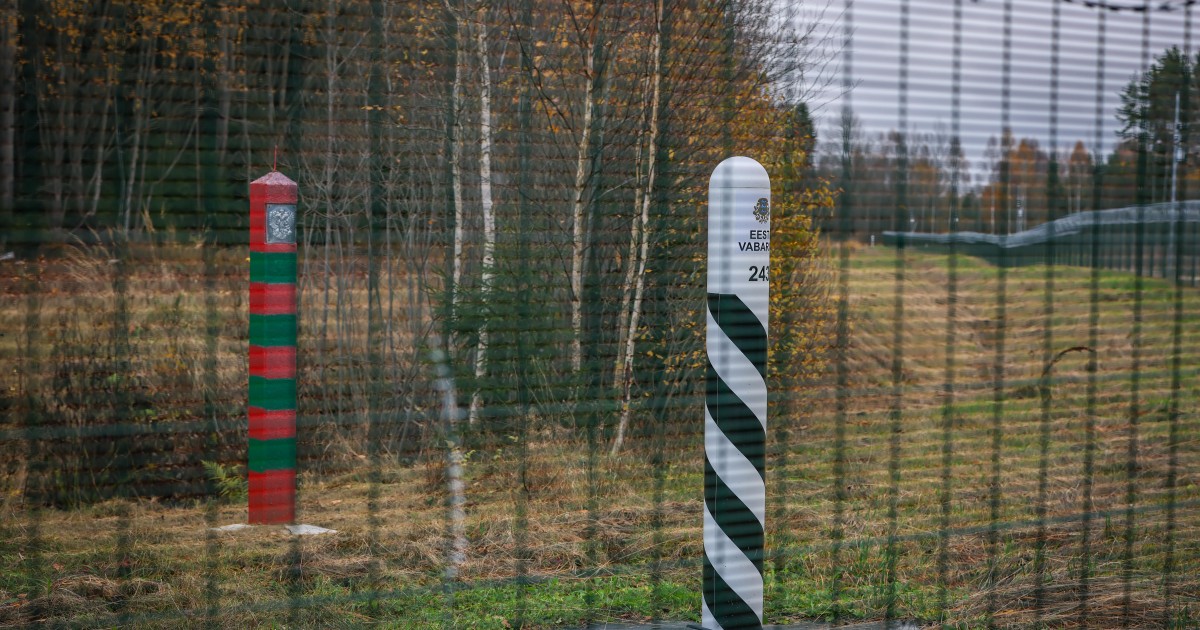
The border crossing points have foldable gates, the closure of which stops border crossings. Fences will be installed on the territories of the border crossing points to stop access.
Border crossings will stop in all the listed border crossing points. The Police and Border Guard Board will ensure the security of the border crossing points.
We can look at this based on the Finnish example. When the Finns closed their border crossing points with Russia in the autumn of 2023, the border traffic did move to the neighbouring countries where the border remained open. Finland’s decision affected Estonian border traffic: a little more than 7000 Finnish citizens crossed the Estonian-Russian land border in 2023; in 2024, there were close to ten times more border crossings by Finnish citizens, i.e. almost 65,700.
It is highly probable that the number of border crossers in Latvia or Lithuania will increase after the Estonian-Russian land border closes. Time will tell how much, and this will depend on the travellers’ own capability and wish to adjust to the new order of things.
Border crossing before and after the closure of the border crossing points
Currently, the border crossing points are open and movement takes place according to the order in force, see more information from https://www.politsei.ee/en/procedure-for-crossing-the-estonian-russian-border. After the closure of border crossing points, it will become significantly more complicated and time consuming to return to Estonia by land, or the possibility to return to Estonia by land will disappear altogether.
Going forward, you will have to find alternative routes to enter Russia on your own or with the assistance of a travel agency: through other countries’ land border crossing points to Russia that are open or by using operating flight connections with transfers in a third country.
The border will be closed for all persons, regardless of the direction of or reason for the border crossing, or the status of the person wishing to cross the border.
If a citizen or a resident of Estonia has not come back to Estonia by December 1, 2026, and wishes to return to Estonia or travel to Russia after that date, he has to find alternative routes to enter or leave Russia on his own or with the assistance of a travel agency.
In that case, you have to search for alternative routes for entering Russia on your own or with the assistance of a travel agency: through other countries’ land border crossing points to Russia that are open or by using operating flight connections with transfers in a third country.
Every person assesses their possibilities and needs to travel to Russia and makes a decision on their own. The Ministry of Foreign Affairs emphatically recommends that everyone avoid all travel to Russia.
After the closure of border crossing points, everyone has to find alternative routes for exiting or entering Russia on their own or with the assistance of a travel agency.
People living in Estonia on a residence permit, who do not hold Estonian citizenship and who decide to remain in Russia after December 1, 2026 have to find alternative routes for returning to Estonia from Russia as well, either on their own or with the assistance of a travel agency.
After the border crossing points have been closed, consular aid is offered on the same basis as it has been since May 5, 2022, when the Consulate General of Estonia in St. Petersburg and the Representation in Pskov were closed.
It should be considered that even now, the offering of consular aid is limited because it is only possible to get it from the Estonian Embassy in Moscow.
In Russia, the Russian Federation considers Estonian-Russian double citizens to be Russian citizens and Estonia’s ability to offer them consular aid is practically non-existent.
Person should obtain travel insurance when travelling to any country, assisting in extraordinary cases, e.g. medical transport if necessary. Before travelling to Russia, a person should find out which insurance company would be willing to insure a trip to Russia. A person who does not have travel insurance has to cover all the costs.
Residence permits and visas
Unfortunately, they are going to have to account with finding an alternative route. The new order will not go into force overnight; people will have time to make preparations.
A foreigner living in a foreign country can order the residence permit card to the closest Estonian foreign representation. It is also possible to submit an application to the Police and Border Guard Board, to change the issuing location. For instance, if a residence permit card has been first ordered to be issued in Põlva, a person can apply for it to be redirected to an issuing location suitable for him. You can find more information here: Claiming your document - Residence permit card for an adult
No, that is not possible. It is possible to enter Estonia starting from the date that has been noted on the visa.
Children and families
- Child Helpline at 116 111: advice on all topics related to child welfare, including parenting and family relationships. The calls are answered 24/7 in Estonian, Russian, and English. Can also be contacted by web chat.
- The child protection worker of the local government: advice, assistance, and support services.
- Tarkvanem.ee: guidance material in Estonian and Russian on how to talk to a child about changes, managing his emotions, and maintaining your own welfare as a parent.
- Victim Support emotional support phone line 116 123: support in case of strong emotional stress, anxiety and dark thoughts. You can call every day from ten in the morning until midnight, in Estonian, Russian, and English.
- Speak to the child calmly and age appropriately about the changes that are upcoming or have taken place; explain what will change in the child’s everyday life. Give the child a sense of security that the people left on the other side of the border will not disappear from her life. Create a new plan, for example by planning video calls at fixed times.
- Avoid a situation where the child has to pick sides, be an intermediary in the communications between the parents, or feel guilty if she wishes to interact with the parent or loved ones who live in Russia. Enable her to maintain relations with the people that the child was used to interacting with before.
- Keep an eye on the child’s reactions and possible changes in her behaviour, to notice early on if the changed situation strongly and continuously affects her welfare and everyday managing. If necessary, the Child Helpline at 116 111 offers quick advice and assistance.
- Include your support network in Estonia, so that you and your child would be surrounded by a secure space while adjusting to the changes.
The closure of the border, as such, does not change the parents’ rights and obligations regarding their child, or invalidate the parents’ agreements or the visitation order determined by the court. The closure of the border can, however, temporarily render the practical execution of the visitation order impossible. In a situation like this, the parents should base themselves primarily on the interests of the child and, if possible, come to an agreement on a temporary solution regarding interactions, for instance by video or phone calls. The parent who is kept from seeing the child by the border closure should not demand that the child be taken to them at any cost, e.g. via the border crossing points of neighbouring countries – the welfare and safety of the child are paramount.
The border closure may render the child’s parent or guardian who lives in Estonia in essence a sole caregiver, creating a possible need to reorganise their work or family life and find assistance in taking care of the child. The solution might be to include people close to you in caring for the child. If this is not possible, you should contact the child protection worker of your local government, who will help with finding solutions.
If a child’s parent or regular caregiver cannot return to Estonia due to the border closure and taking care of the child in a regular manner becomes impossible because of that, the first course of action should be to try to organise for an adult who the child knows and is safe to take care of them. If that is not possible or the child’s welfare and safety are at risk, you should contact the child protection worker of the local government where the child is staying or the Child Helpline at 116 111. If there is an imminent danger, you must call 112.
A minor must be brought from Russia to Estonia before the border closes if her parent(s) or home are in Estonia.
After the border crossing points close, you will have to find alternative routes to enter Russia on your own or with the assistance of a travel agency: through other countries’ land border crossing points to Russia that are open or by using operational flight connections with transfers in a third country.
Social sector, social services and benefits
The complete closure of the border can lead to an isolated number of disruptions for healthcare and care facilities in cases where the healthcare workers living in Russia are unable to make it to work in Estonia anymore. In the majority of cases, the facilities have already accounted for the possible border closure ahead of time and found alternative solutions.
The workload of healthcare institutions might somewhat increase by those people who have been using Russian healthcare services thus far.
Medicines are not being imported from Russia since the war began in Ukraine and export from Estonia to Russia is minimal. Single medicines being moved with special permits are not of critical importance.
The closure of the Estonian-Russian border does not affect the rights of an Estonian resident to social services or benefits.
The right to social assistance depends on the conditions of the specific service or benefit, mainly on the person’s place of residence and need for assistance. If a person lives in Estonia legally and his place of residence is here, the necessary services are provided by the local government of his residence. If it is not possible to determine a place of residence, a person who is on the territory of a local government when he requires assistance can also apply for emergency social assistance.
The border closure does not affect the provision of state services, benefits and pensions either.
The border closure could affect people who have been going to Russia of their own volition to receive services, e.g. by paying for them. The border closure does not affect a person’s right to receive services but cross-border movement and receival of services in Russia could become complicated or impossible.
Examples:
- A person is living in Estonia, but she has a Russian or a grey passport: the border closure does not affect her social rights.
- An Estonian citizen is living in Russia but has thus far been receiving or buying services in Estonia: the rights stemming from Estonian citizenship do not disappear, but the border closure might render the physical use of a service impossible. The border closure does not, however, affect the receival of pensions and other benefits by bank transfers, as well as the provision of remote services.
- A person is living in Estonia but has thus far been receiving or buying services in Russia: the border closure could interrupt his ability to use the services he has been using but it does not affect the person’s rights in Estonia. If the person has the right to receive services and benefits offered in Estonia, this opportunity still stands and, depending on the situation, he can turn to either to the local government of his place of residence or a state institution. This also applies in a situation where due to the interruption of a service or other assistance received in Russia, the person becomes in need of assistance. In that case, the local government assesses the person’s need of assistance and support is provided based on the specific situation. If a person has received or bought services in Russia to which he does not have a substantial right in Estonia, he will not get that right with the border closure either.
- A person is in Estonia and requires urgent social aid: the local government must ensure urgent assistance (food, clothing, and temporary shelter) to a person in a critical situation and this does not depend on citizenship or type of passport.
Healthcare services
The closure of the border with Russia does not impede the provision or financing of healthcare services in Estonia. The provision and financing of medical aid in Estonia will continue as usual.
The Estonian healthcare system and quality of healthcare services are at a high level in the context of the whole of Europe and there is no reason to go to Russia for treatment. Estonian citizens can choose their family doctor, who advises in case of health issues, plans treatments if necessary, or issues a referral to a specialist. A person who has health insurance in Estonia receives medical assistance in the same way as other insured people in Estonia.
Russian citizens must have valid health insurance to get services on the same basis. You can read about obtaining it from the web page of the Estonian Health Insurance Fund: https://tervisekassa.ee/en/people/health-insurance
Once a person has health insurance, he can choose his own family doctor. You can find instructions on the web page of the Estonian Health Insurance Fund: https://tervisekassa.ee/en/primary-health-care
Uninsured patients receive healthcare services by paying for them themselves.
Emergency and urgent care are free to all persons staying on the territory on Estonia, regardless of their citizenship, insurance status, or any other circumstance.
The first recommendation is to return to Estonia as quickly as possible – you can do this until the border closes. Once the border crossing point is closed, you can return to Estonia by alternative routes, by land through neighbouring countries or by air: for instance, according to current information there are regular flights from Russia to Turkey from where there are also direct flights to Estonia. Before planning any route, you should find out what conditions apply at that specific time in the countries on the way.
In Russia, consular aid is only offered by the Estonian embassy in Moscow, and usually it is necessary to physically go there.
The border closure could affect the chances of going to Russia for planned treatments and make the journey complicated and long. If you have a family doctor in Estonia, we recommend first turning to her to discuss what would be the options to receive the necessary treatments in Estonia. The family doctor will assess your health condition and refer you to a specialist if necessary. The Estonian Health Insurance Fund has not financed planned treatments in Russia since the start of the full-scale war against Ukraine.
Medicines and medical devices
If you have been buying medicines from Russia until now, we recommend turning to your family health centre or treating doctor well ahead of time to find an alternative to the necessary medicine available in Estonia. A pharmacist can offer advice about over-the-counter medicines.
No medicines, medical devices or aids are imported from Russia to be marketed in Estonia, so the border closure does not affect their availability.
There are also no changes foreseen in the availability of medicines and medical devices compensated by the Estonian Health Insurance Fund.
Effect on the economy and enterprises
The effect of the border closure on the Estonian economy as a whole will be modest.
Compared to 2021, the export of goods to Russia has decreased about three times, the export of goods of Estonian origin five times, and the import volumes are only a few percent of what they were then.
The border closure could have an effect on a few enterprises and areas, especially in the sectors of transport, storage, trade, and the manufacturing industry.
The border closure will also affect the trade with other countries that takes place through Russia.
The closure of the border crossing points has the biggest effect on Narva, Setomaa, and Ida-Virumaa and Southeastern Estonia in general. The effect may present itself in the jobs related to the border crossing points, as well as transport, hospitality, catering and other enterprises of the region.
The state will continue implementing the existing business development and labour market measures. For instance, in Ida-Virumaa, the state fosters job creation, business development and the retraining of people. The Estonian Unemployment Insurance Fund offers regular services to those who have lost their jobs, and support in finding a new job.
Based on the current input, the Government has not decided on any further special compensation measures. The effect of the decision on the people, enterprises and areas has to be assessed, and further solutions can be considered based on that, if necessary.
More than 150 Police and Border Guard (PPA) employees and about a hundred customs officials work in the border crossing points on the Estonian eastern border.
The closure of the border crossing points does not mean that the border guard positions disappear. The work of a border guard is not limited to checking documents at a border crossing point. The guarding of the border includes monitoring, patrol activities, reacting to border incidents, and readiness for hybrid threats. The tasks of the Border Guard continue along the whole border.
The knowledge and skills of the people working on the eastern border will remain in use. PPA has already begun preparing solutions regarding the working order, so that the changes, should they become necessary, would take place smoothly.
The customs control also has an important role in ensuring Estonia’s security, including enforcing international sanctions and stopping the movement of prohibited and restricted goods. The work of the customs officials will be reorganised according to the threat picture and flows of goods. The workload, necessity of tasks, competencies of the workers, and the maintenance of the long-term capabilities of the customs will be taken into consideration.
In addition to the border guards and customs officials, there are also 16 employees of the Estonian Agriculture and Food Board (PTA) working on the road borders, as well as a few dozen workers of the border crossing point waiting areas at Koidula and Luhamaa. It is necessary to reorganise the work of those employees as well, to find replacement work or retraining opportunities.
Transport of goods and international bus traffic
The timing of the border closure takes into account the need to give carriers sufficient time to conclude ongoing transport operations and for the vehicles to return to Estonia. Once the border crossing points close, the transport vehicles cannot directly cross the border between Estonia and Russia anymore and need to use other open border crossing points to return.
After the road border crossing points close, the transport vehicles and buses cannot directly cross the border between Estonia and Russia anymore.
This affects transport operations to Russia, as well as transit to third countries, e.g. Kazakhstan, Uzbekistan, Armenia and other countries, if the previous route was through Russia.
The carriers and owners of the goods have to find alternative routes or logistical solutions. This might mean longer journeys, higher costs and organisational difficulties. Once the cross-border bus traffic stops, the travellers have to contend with the disruption or reorganisation of connections.
Upon the closure of borders, the goods vehicles cannot cross the border between Estonia and Russia anymore.
Questions regarding the compensation of cancelled trips have to be addressed directly to the transport operator. In some cases, a valid travel insurance may be of assistance.
The transport of goods to Russia has already decreased significantly in the last years. According to the Association of Estonian International Road Carriers (ERAA), 500 enterprises were active in transport to Russia before the full-scale war started. As of today, the ERAA estimates that the border closure will affect about 50-90 enterprises.
The number of transfer licenses used by Estonian carriers for Russia is also showing a downward trend. Compared to last year, the use of transfer licenses has dropped by 30% this year. Altogether, the Estonian carriers have applied for 5249 transfer licences for goods transport to Russia as of November 16, 2026, each of which generally gives the right for one two-way haulage.
The border closure will have an effect on goods transport with countries for which the transport takes place through Russia. Those are, for example, Armenia, Azerbaijan, Georgia, Kazakhstan, Kyrgyzstan, and Uzbekistan. Estonian carriers have applied for about 20% fewer transfer licenses for goods transports for those countries this year, altogether 342 times.
The border closure will also affect those carriers of the abovementioned six countries who transport goods to Estonia or through Estonia. In their case, it could affect an estimated couple of thousand haulages a year. About 80% of those are transit haulages, i.e. the goods move through Estonia to other countries in both directions.
Other third country carriers who use Estonia as a transit country (e.g. Serbia, Turkey etc.) as well as carriers from EU countries will also be affected by the border closure.
When the border closes, both the carriers and the owners and processors of the goods have to find alternative routes or other logistical solutions to continue their transport operations. This pertains to both transports from Estonia to Russia and third countries through it, as well as to Estonia from there.
The risks connected to the transport of goods with Russia have been known for years and the enterprises have had to consider the possibility that further restrictions will be set for cross-border traffic.
Rail freight transport
The decision of the Government covers road border crossing points. The Narva rail border crossing point will remain open for freight transport and the control of requirements regarding restrictions and sanctions in force will continue. Because of a unilateral decision of Russia, the freight transport through the Koidula rail border crossing point has already been suspended.
Among other matters, the decision on continued rail freight transport takes into consideration the economic and strategic interests of Estonia and Europe.
The total closure of rail border crossing points would have a clear effect on Ida-Virumaa. Rail is being used to bring strategically important raw materials from Russia to all of Europe.
Last updated: 20.11.2026